“The New Era of Film Scanning”

From Soke Engineering: Knokke The New Era of Film Scanning.

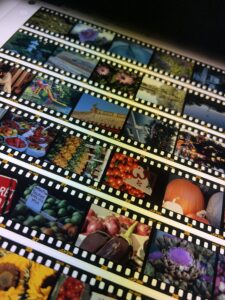
Strips of slide film (positive) on a light table viewed in a diagonal orientation. The punchy colours brings joy to the photographer.
Strips of slide film on the light table.

The very short version: a new 35 mm film scanner with roll feed, not unlike the Pakon. But with modern parts, repairability, and open-source software to drive it. The software part is not negligible. You cannot use a Pakon without installing the software on obsolete Microsoft malware. Same for the very expensive Fujifilm Frontier, for for Nikon or any other vendor from decades ago. And without the software they are expensive bricks.

Their target price is €999 at launch, later €1599 (I do have questions). With an intent to scan a roll in 5 minutes at a resolution of 4064 dpi.

It’s still in a state of development, with a Kickstarter planned for Q1 2026, so it’s not available soon yet. But it’s good to see a renewed interest in that niche of equipment that the previous manufacturers have abandoned with their software no one can fix and that doesn’t run on modern computers.

I’ll make sure to post an update.

Link: Pakon F235

Dante Stella tell us about the Kodak / Pakon F235 Plus high-speed film scanner:

First, it is designed for speed. An F235 Plus, for example, will do 800 frames an hour at 3000×2000 resolution (yes, that’s 33 rolls per hour, or a roll or 24 frames about every two minutes). With Digital ICE turned on, it still does 400 frames an hour.

Colour correction. Kodak basically owns the world of colour correction, and this machine nails the colours 99.5% of the time.

In sum, this is an exiting piece of equipment made accessible, sadly, by the collapse of commercial film processing.

I mentioned this previously as an alternative to the Frontier. Fujifilm vs Kodak. It’s sad nobody produce these and that the know how has disappeared, but then would they exist new at $2,000 a piece? The used refurbished market from these seems to be the way to buy what cost much more initially.

The 2017 followup article: The Kodak/Pakon F235 Plus, revisited.

Previously: The magic of Fuji Frontier SP-3000

Link: The magic of Fuji Frontier SP-3000

Sebastian Schlüter wrote in 2018 about The magic of Fuji Frontier SP-3000.

Fuji Frontier is the product line moniker for minilab solutions from Fujifilm. In the early 2000 their minilab Fuji Frontier was the reference for film processing and printing, and one of its main attribute is that the printing phase was done digitally. Instead of optically enlarging the image, you put the source film transparency into the scanner, and it will print the images on photographic paper (RA-4 process). And the SP-3000 scanner, the latest model that was part of that minilab system, is still thought after as it produces high quality images out of the box. This was part of the magic (that can’t be distinguished from technology). Just to add how this was revolutionary, it allowed producing mini contact sheets, and it allowed printing slide film without intermediate negative or without inversible (positive) photographic paper. As a business, you could charge 5-10$ extra to store the scans used to print on a CD. Your 1 hour photolab likely used one of these, or its competitor like Noritsu, Agfa or Kodak.

One of the key point of the Frontier is that is does its work fast and automatically. Scanning is always a lengthy process and hard to tune to get good results. The Frontier integrates all of that. Other alternatives are Noritsu who offers a higher resolution, and Kodak Pakon, that requires 20+ years old Microsoft Windows XP to drive it, but is much smaller. Acquisition costs for a Frontier SP-3000 starts at CA$6,000 on the used market and the device takes a huge amount space, so does the Noritsu, and have the same requirement for maintaining the same operating system.

The film to digital workflow is either expensive, slow or poor quality. DSLR scanning provides a good DIY alternative that is reasonably priced if you already have the camera and a proper setup rival dedicated film scanner on many aspects.

Previously: How film commercial processing and scanning is done
EPSON launches new photo film scanner

EPSON launches benchmark flatbed film and photo scanners.

This to replace the top V700/V750 scanners. It is good to see that EPSON continues to invest in that field. Now we shall see if the quality on small medium like 35mm film is up to the expectations, but it is not like there is plenty of choice since Nikon bricked their expensive CoolScan by abandoning the low quality software that came with it – low quality because it didn’t run on more modern OS, at least on MacOS.

Time will tell.

Digitising film with a DSLR

Scanning Film Negatives With A DSLR – A Maker’s Guide by DIY photography.

Right now I can get higher resolution and better image quality that what street labs give you on CD.

It is not just a matter of photographing the film with a digital camera. There is must much work behind the scene, and given the price and rarity of film scanner, and the performance of even high end flatbed scan with film support like Epson V600 and V700, it might be worth it. I have always thought I good do it that way, but never went the extra effort to actually do it properly. It is probably way easier with black and white.

Remember, slide duplication was done that way, albeit with a specialised duplication film that had some very specific characteristics.

When I build one of these rigs, I’ll let you know.